Oil Painting
Painting Alongside Design
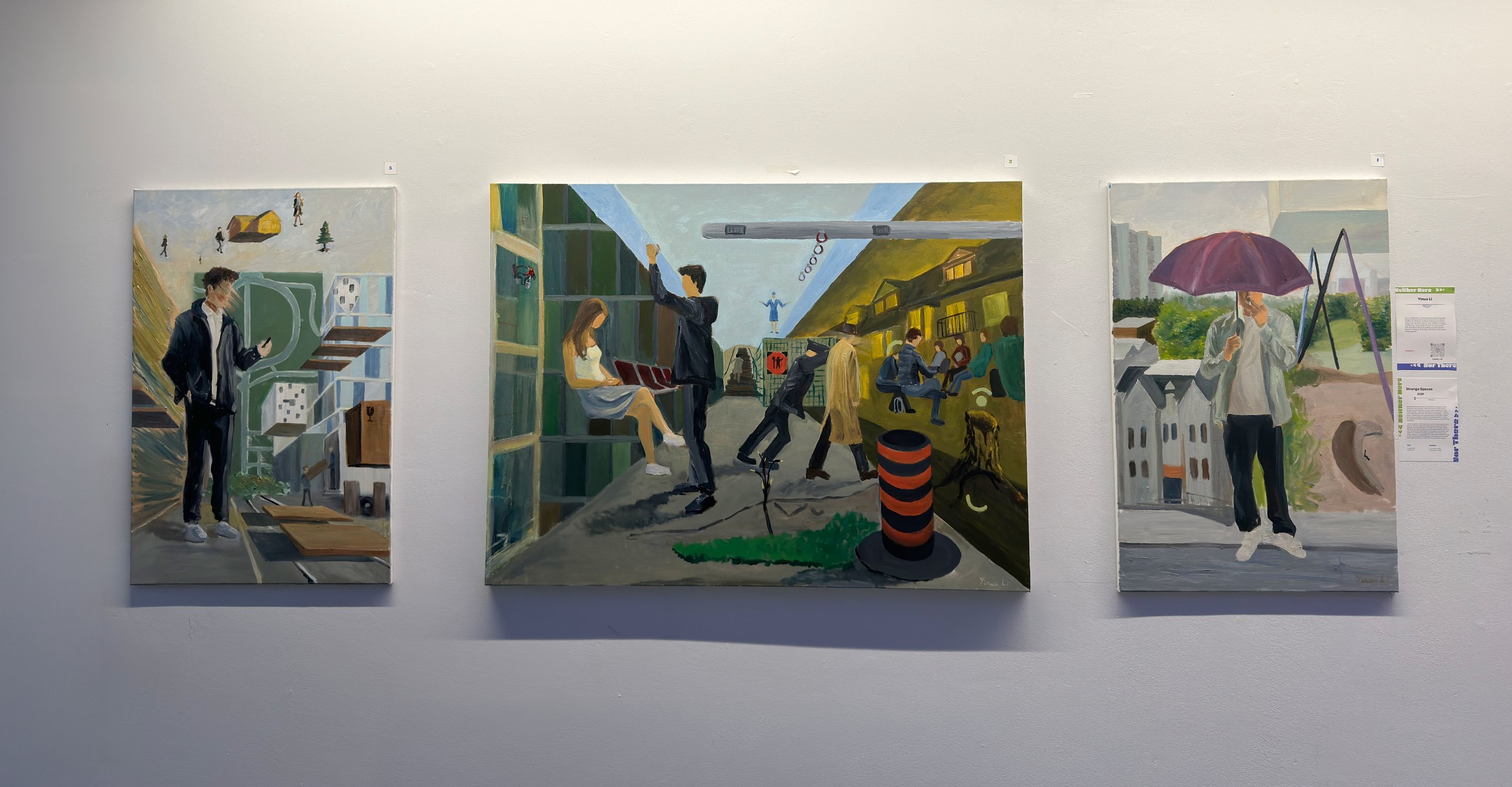
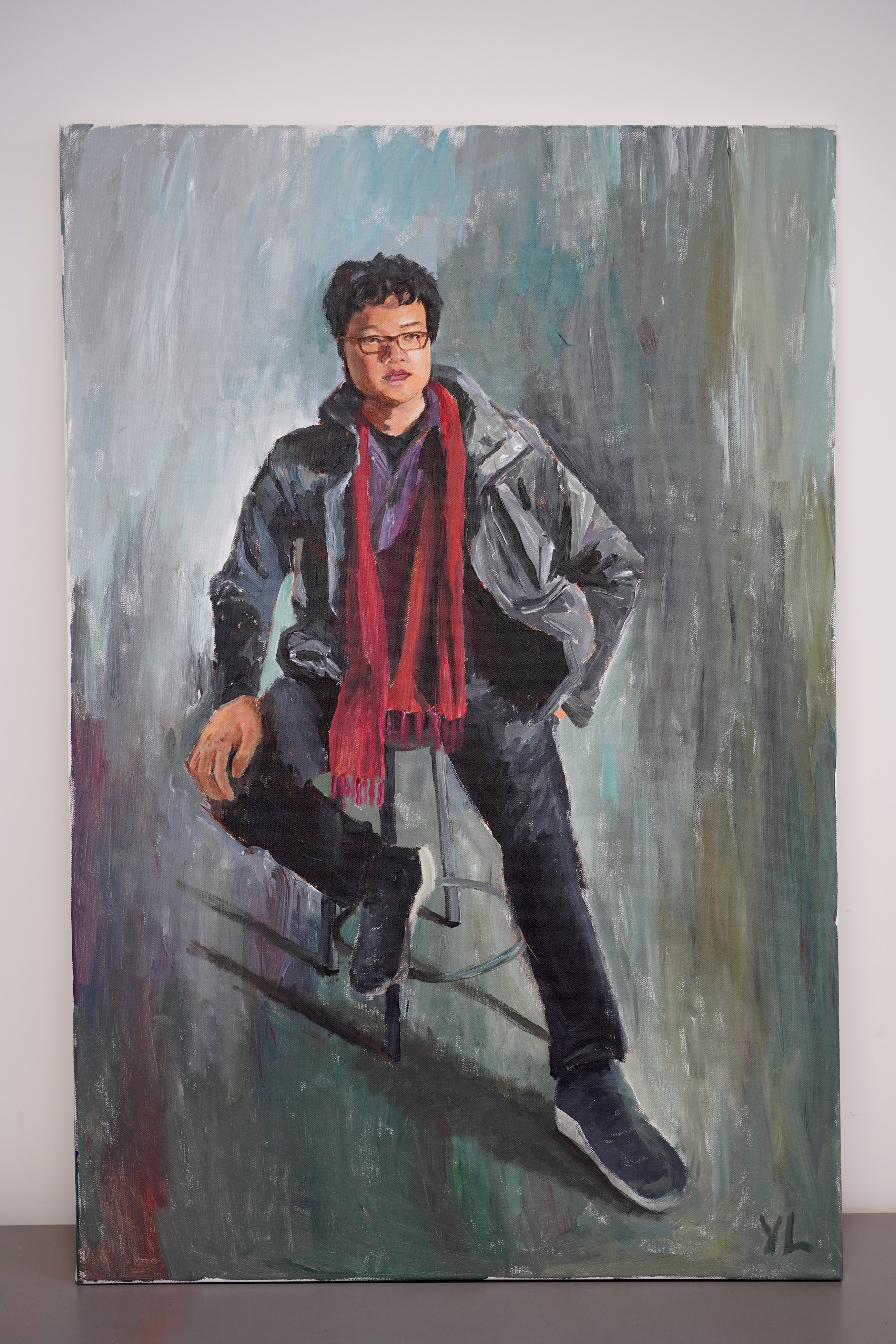
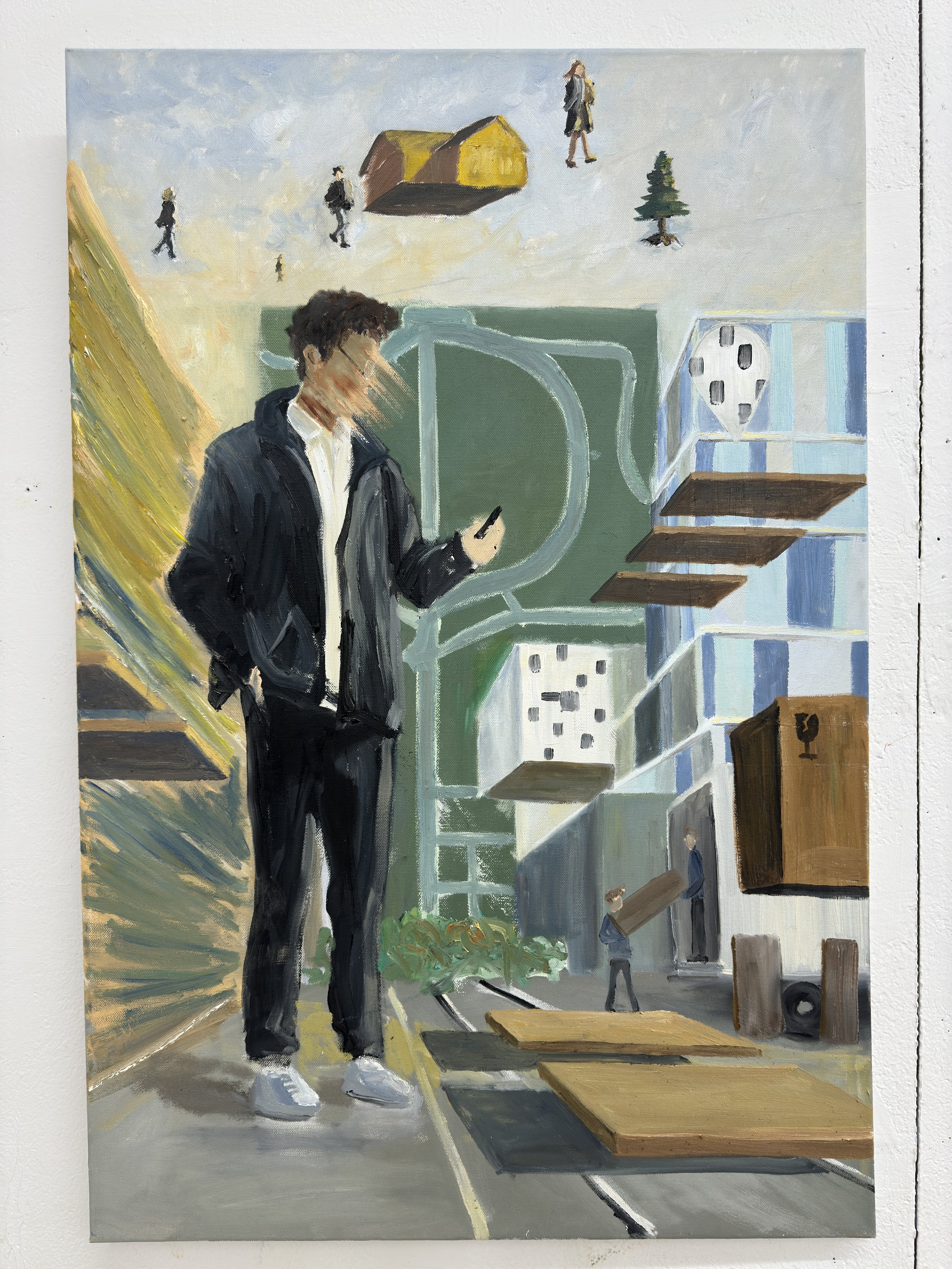
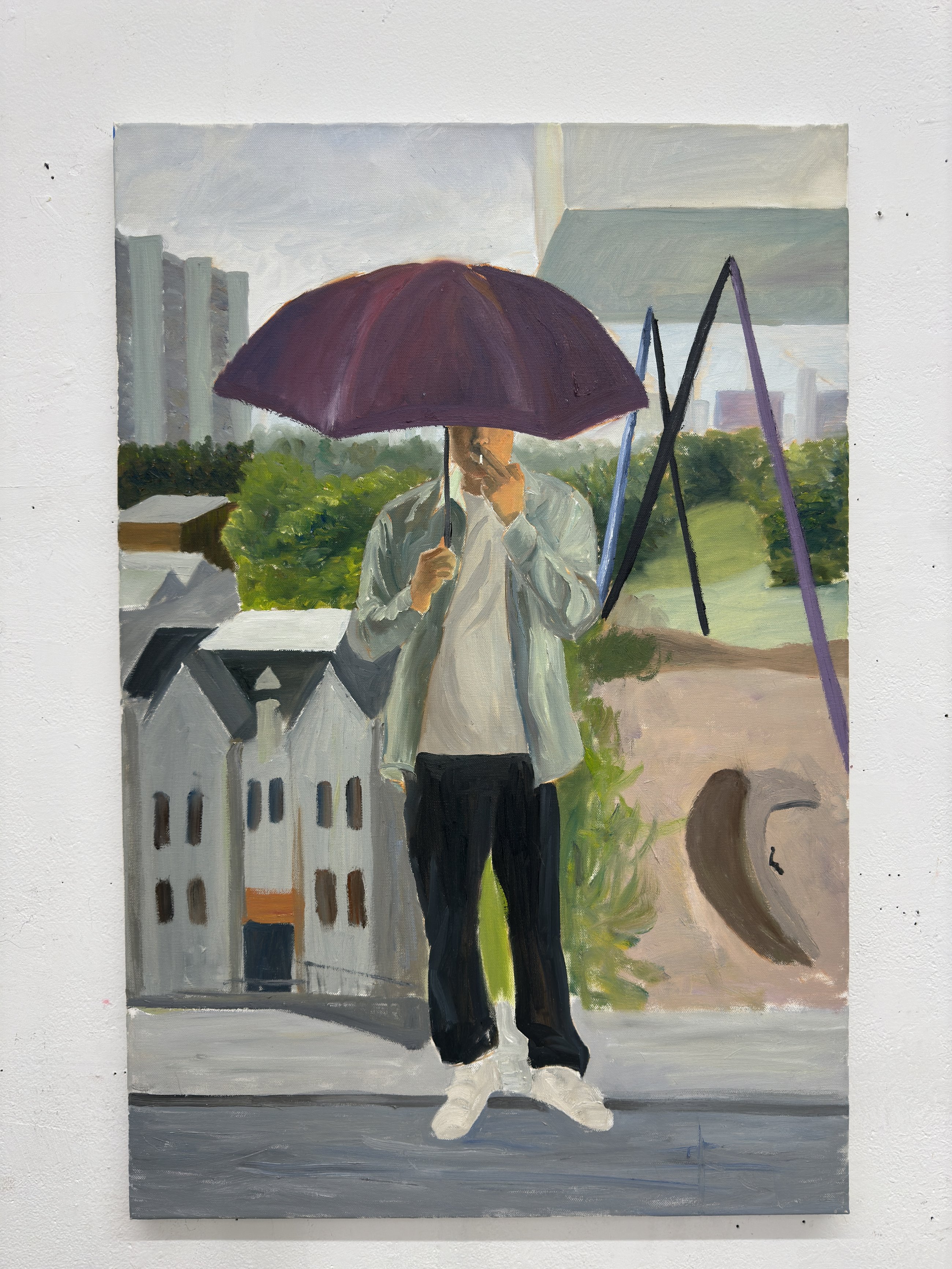
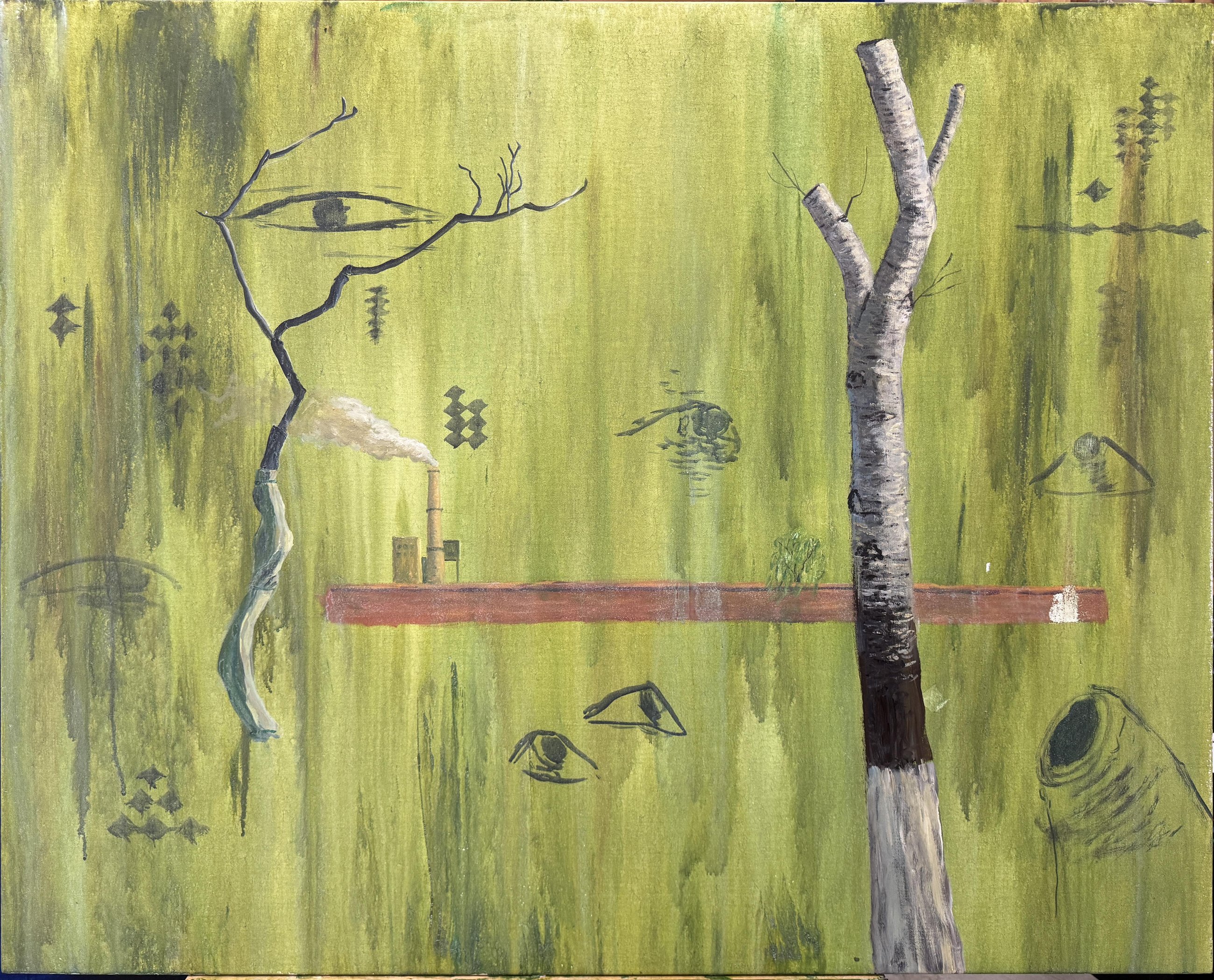
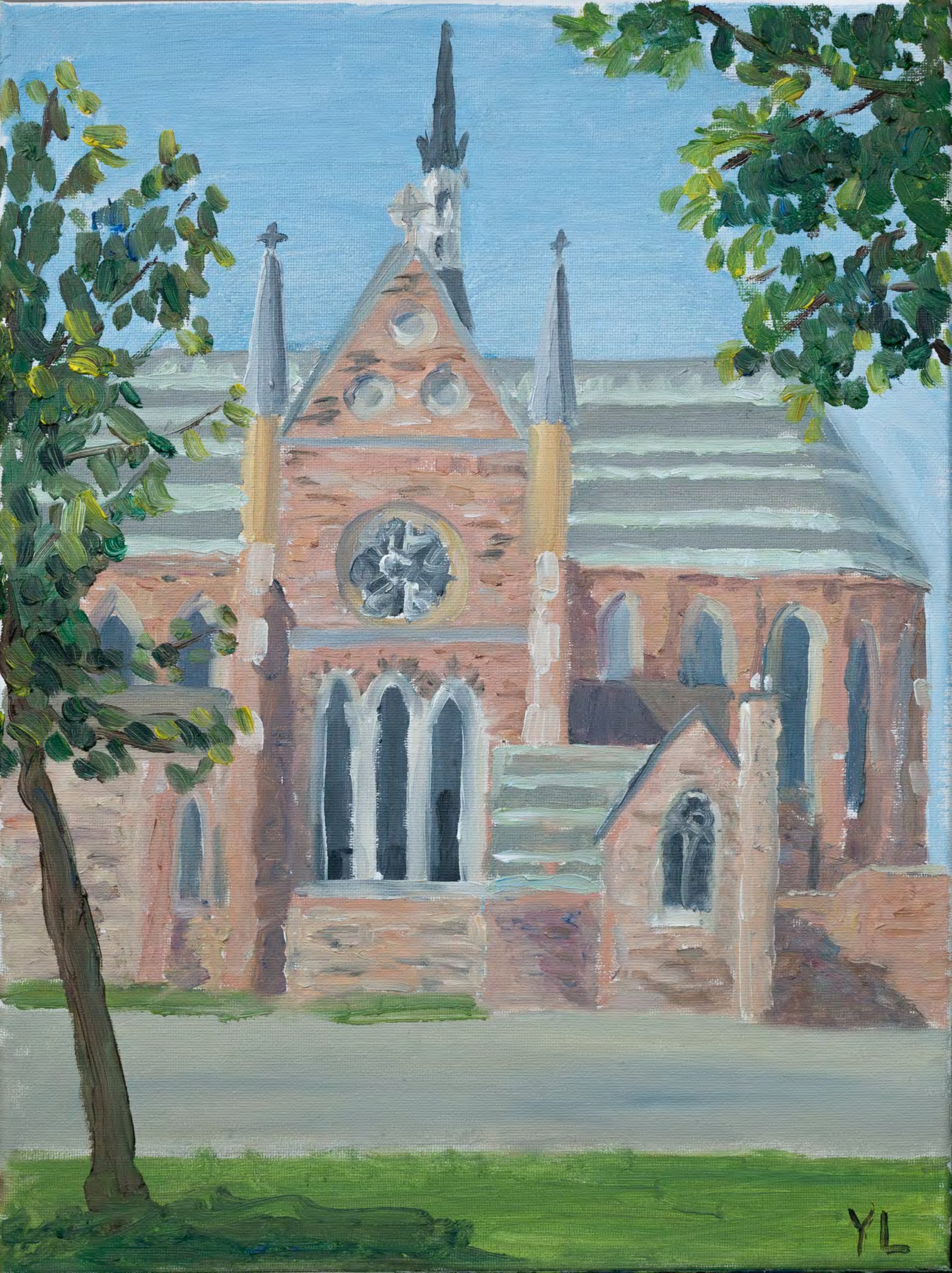
Oil painting has been a continuous personal practice running parallel to my design work. Where graphic design is about clarity and system, painting is where I slow down to observe colour, light, and human form directly. These canvases range from self-portraits and urban scenes to surreal compositions, and they inform how I think about hierarchy, texture, and atmosphere in every design project I take on.
Selected Oil Paintings
Ongoing personal practice
Oil, charcoal, and mixed media on canvas & paper
2020 — present
Painting is where I study people and places with my hands. Unlike a design brief, each canvas starts from direct observation — a street corner, a moment caught in changing light — and lets me spend hours refining a single gesture, shadow, or palette without a client or deadline in the frame.
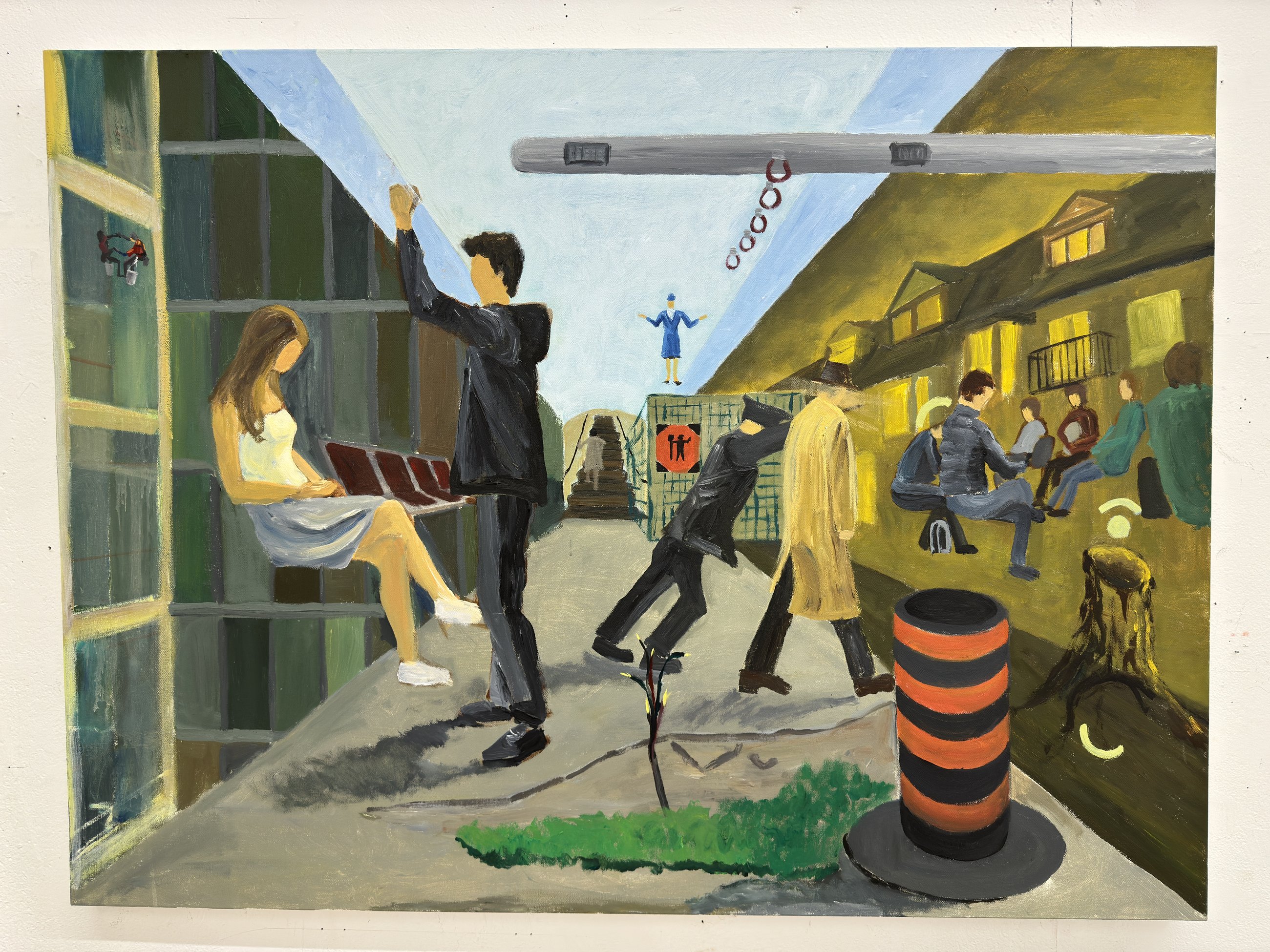
The street and city work grew out of walking around Toronto with a camera. I take photos, then work them up on canvas as composite scenes — a falling figure, a stranger under a purple umbrella, a street lined with exposed pipes and wires. Composing these pieces is the closest my painting practice gets to graphic storytelling: scale, hierarchy, and implied narrative all doing work together.
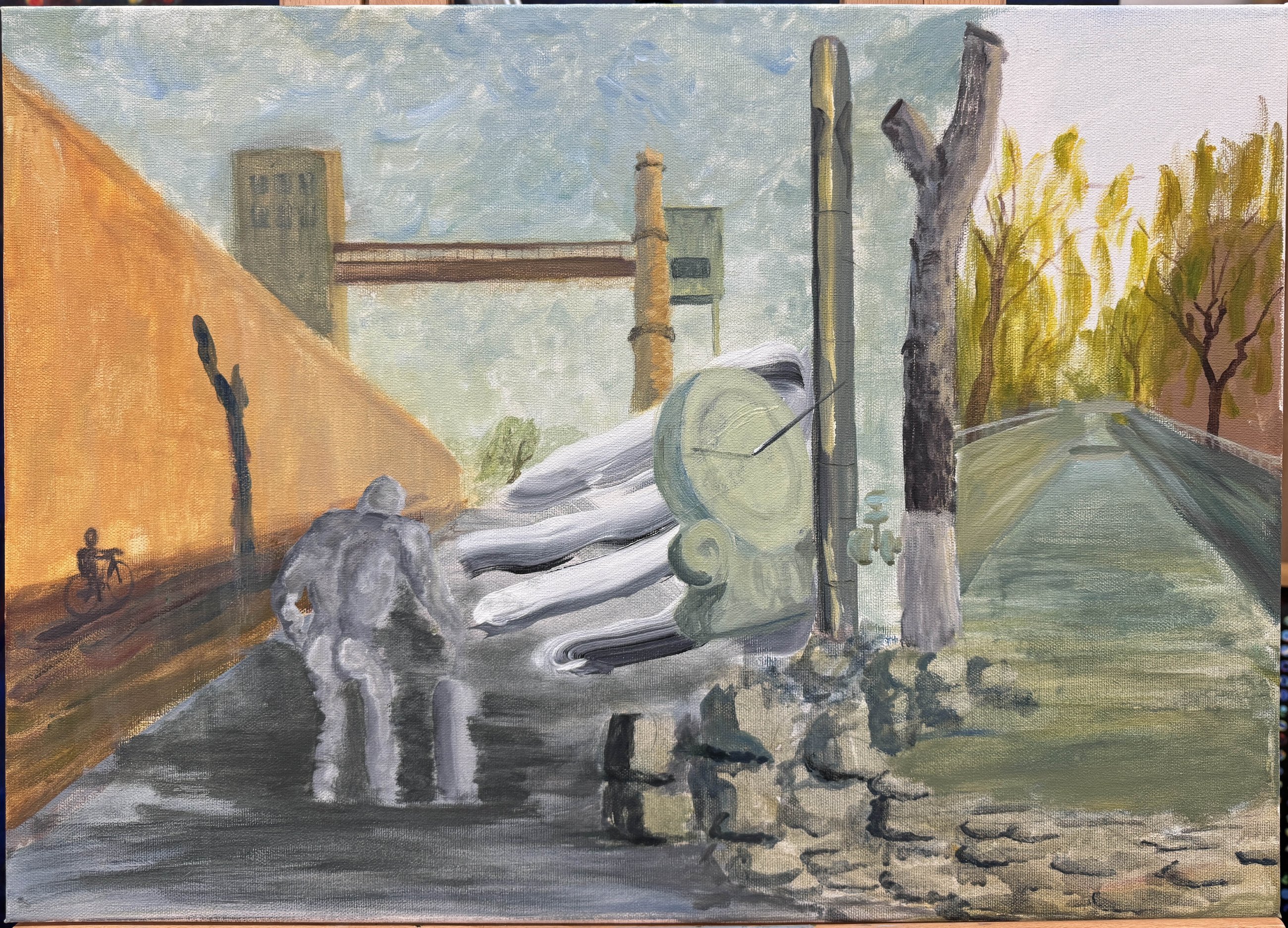
The symbolic and textured pieces (the green poplar canvas, the industrial landscape) are looser experiments in mark-making, layering, and mood. They're the ones where I give myself permission not to plan — to let the brush decide, and see what imagery surfaces.
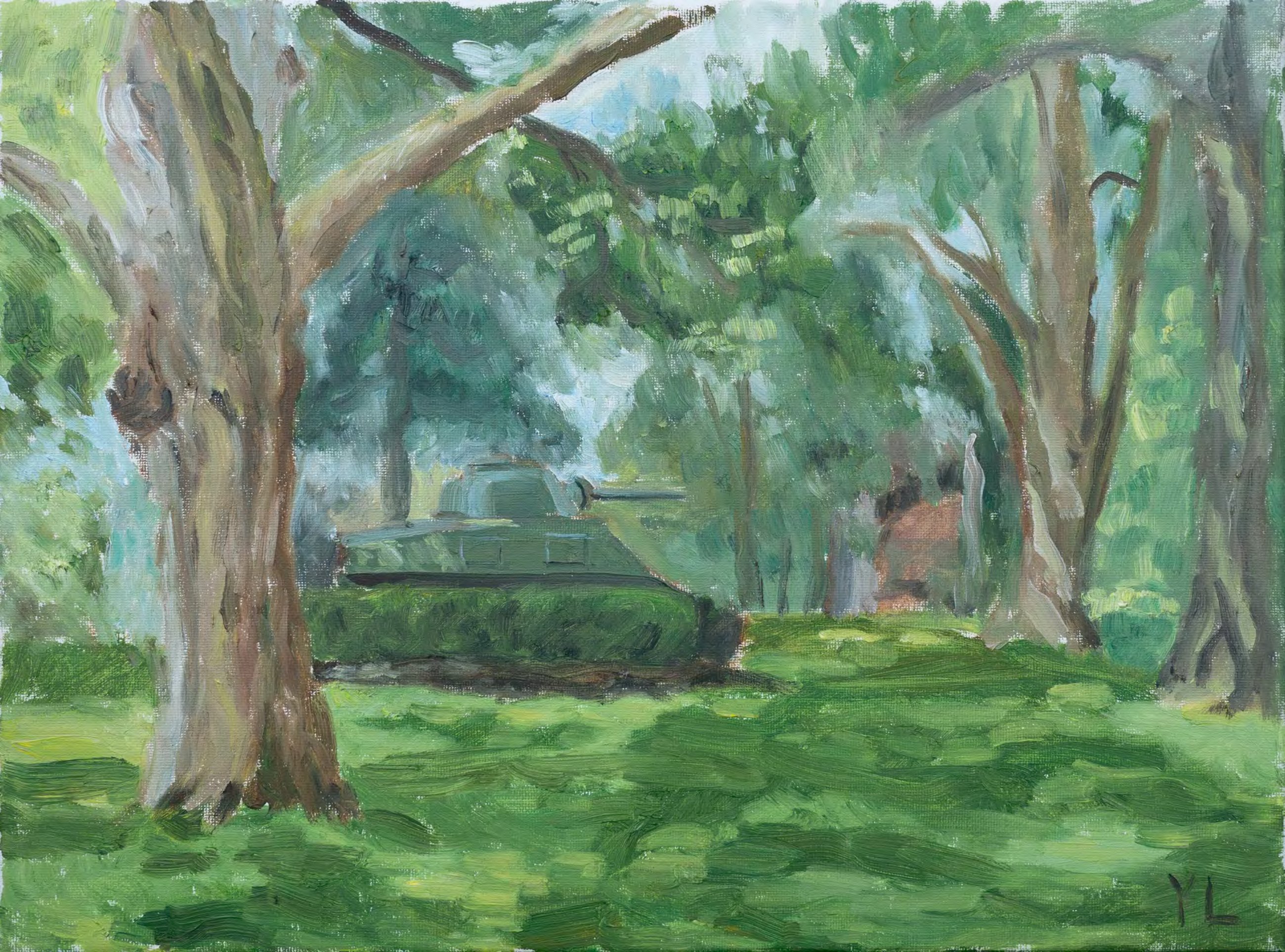
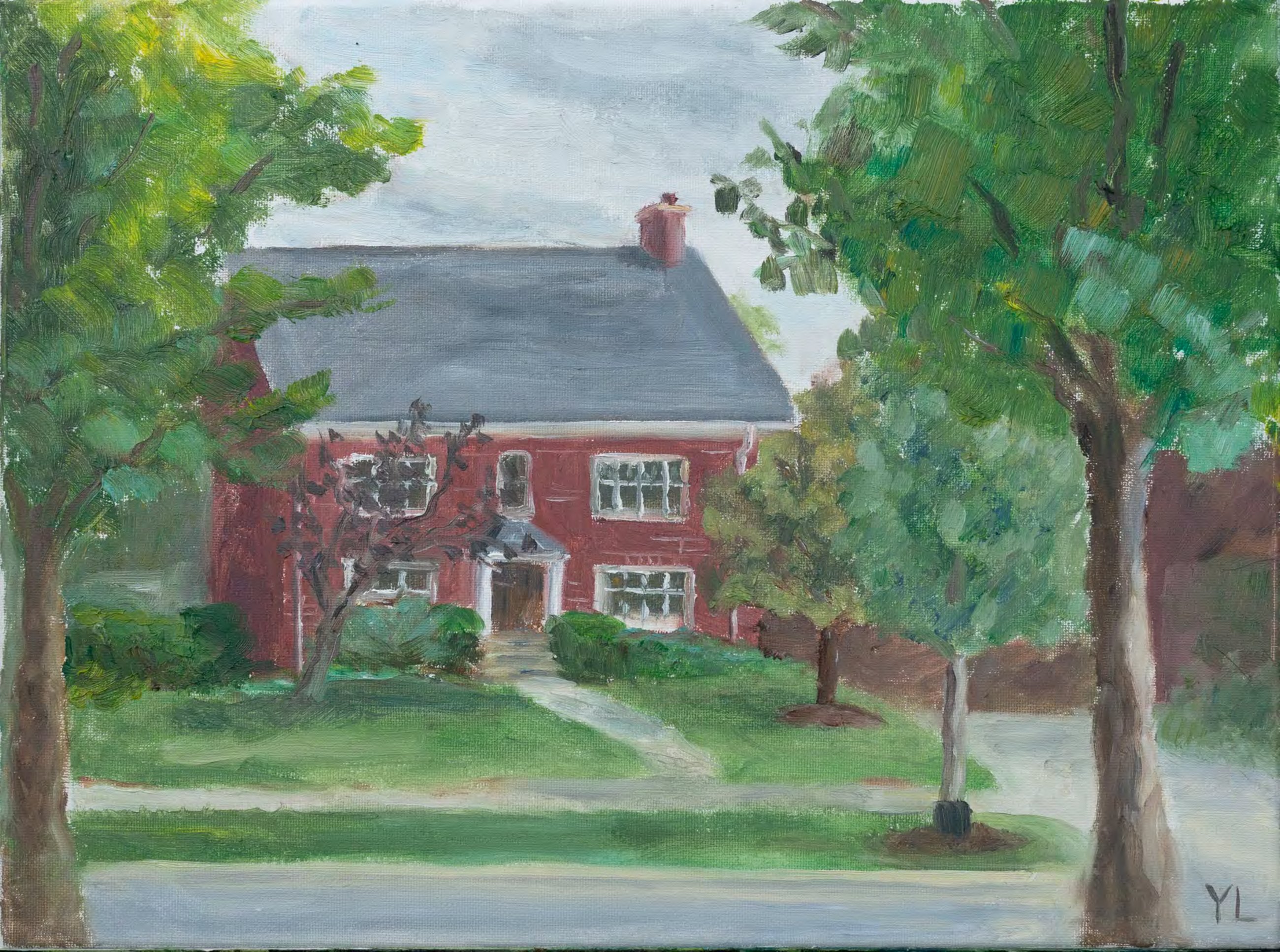
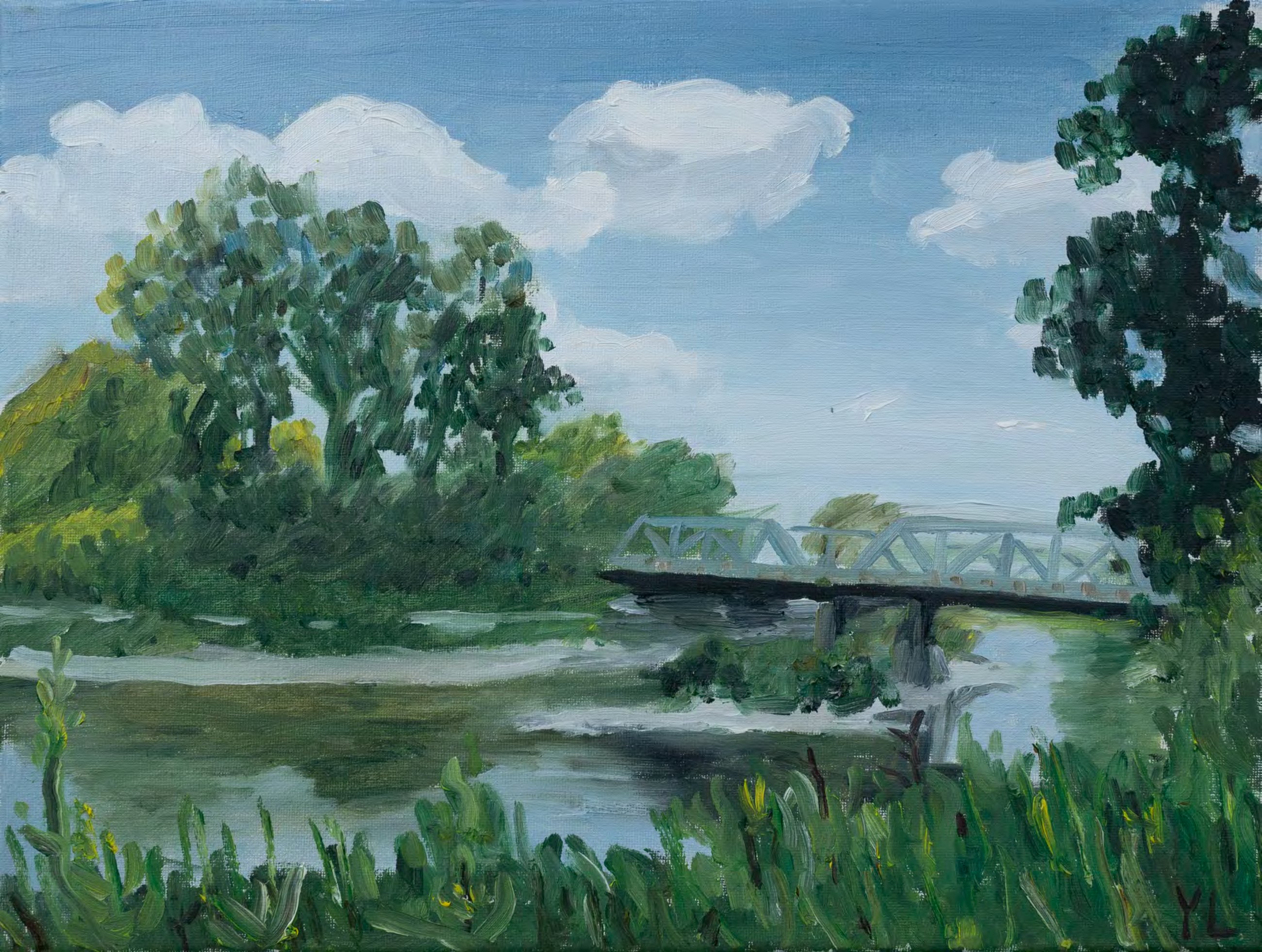
The Victoria Park series is a small set of plein-air studies — each canvas painted on location in a single sitting, working directly from the subject without later reworking. It's the kind of discipline a screen can't teach: committing to what's in front of me and moving on.
Design is rational work — every brief has an optimal solution, constraints to resolve, systems to align. Painting is the opposite: an intuitive, free-form practice where I look for order inside chaos, deciding in the moment instead of in advance. Running both in parallel keeps me honest about which mode a problem actually needs.
See my work
Here are a few of my other projects. Feel free to explore.